
Inside the Artistic Practice of John Carluccio
Charting memory, dialogue, and human connection through rhythmic lines, shapes, and color.
The Story
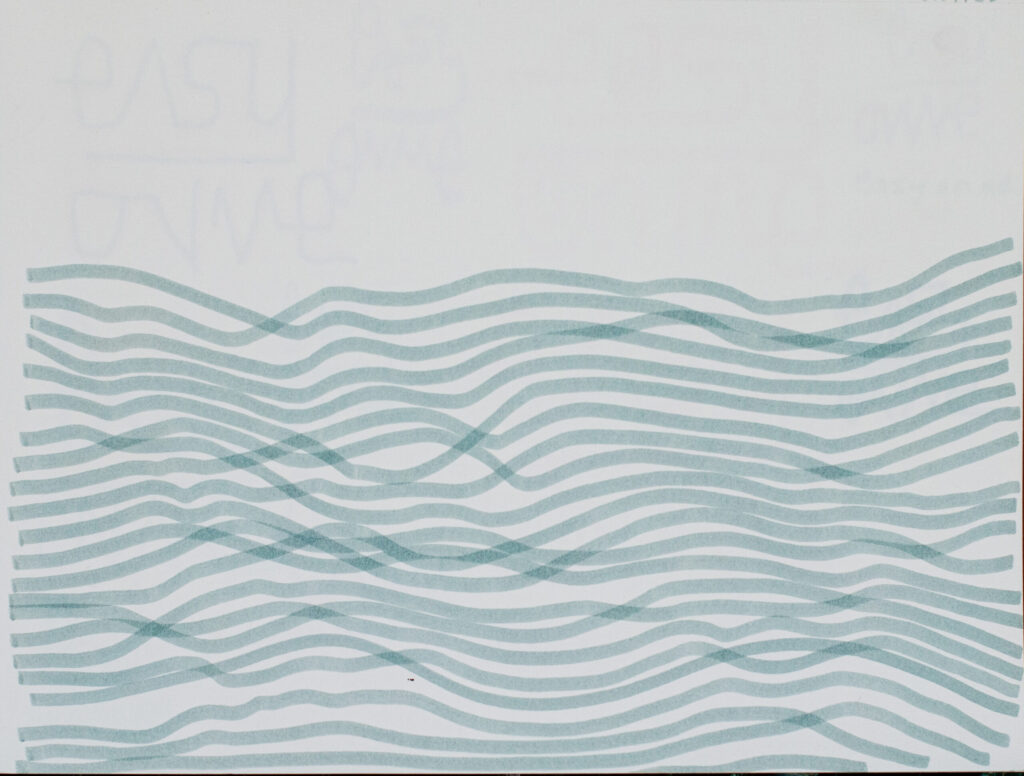
John Carluccio’s work explores personal relationships through line, color, and organic shape. Lines often represent time, color conveys mood, and shapes embody lasting memory. The compositions can appear harmonious or conflicted, reflecting how relationships move through rhythm, tension, and change. The work functions as an emotional data chart.
He has produced a series of videos that offer viewers an inside look at his artistic journey and the development of each series.
Chapter 1-4 | 2021-22
Relationships : Mood, Fear & The Dance
“The lines helped me make sense of relationships that were good, bad, mysterious, and joyful. It helped me see how imperfect relationships are, how dependent we are on each other, and how parallel energy can be in concert or in conflict.“
Read the artist statement about the process
LINES (2021)
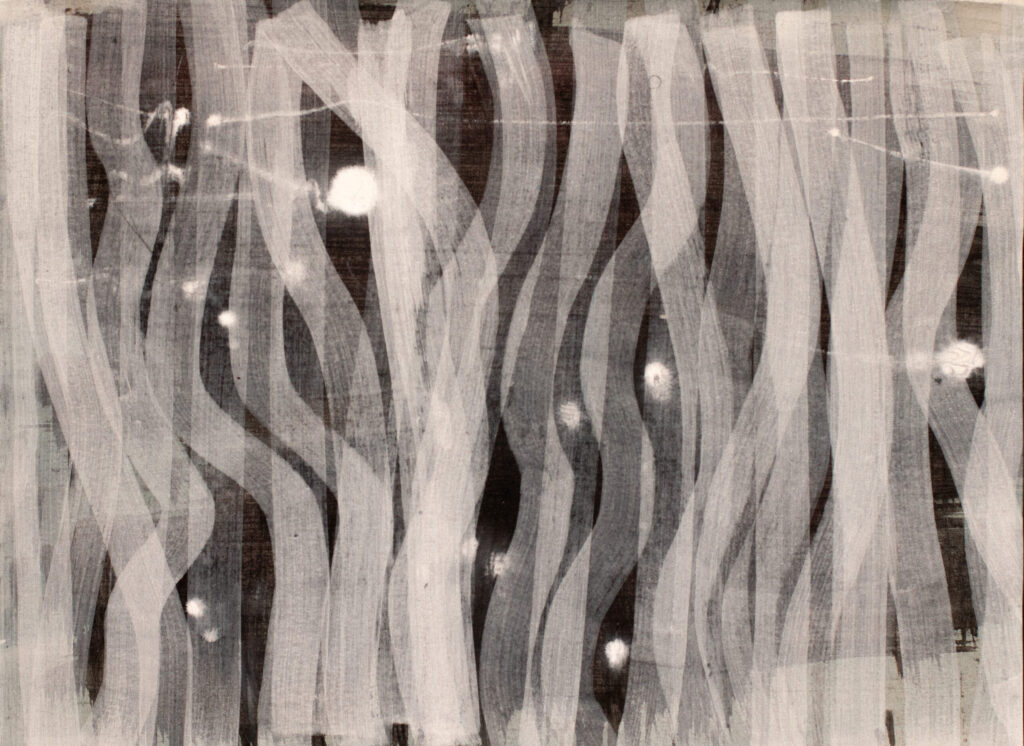
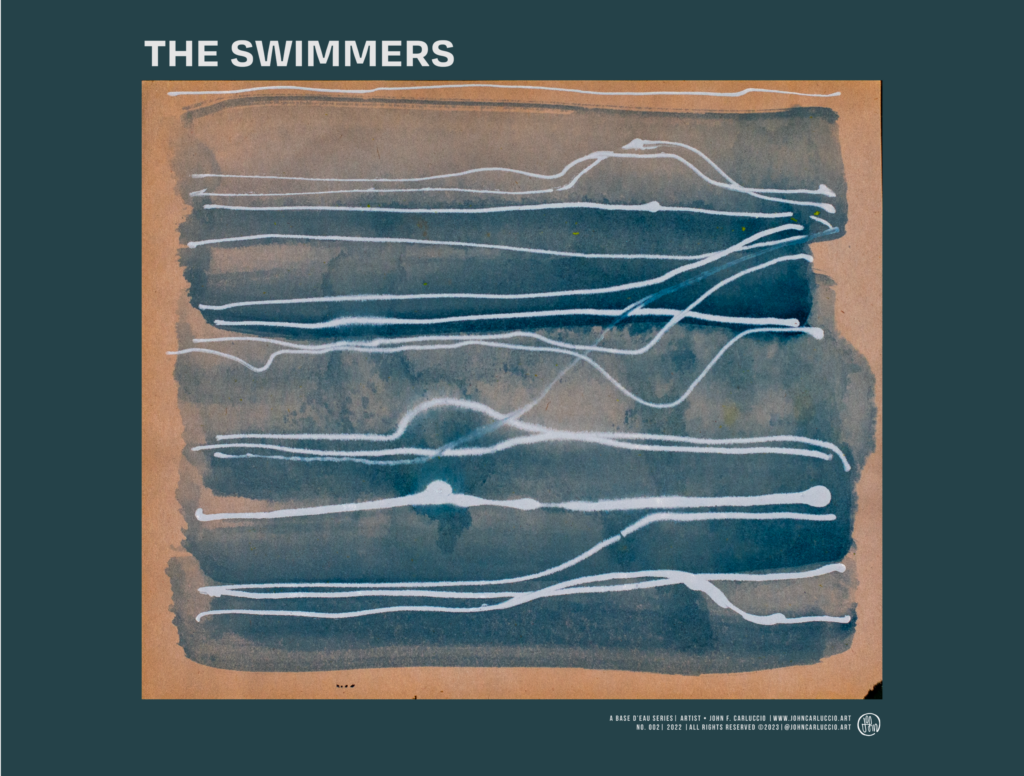
I started drawing lines. One line next to another. I tried to get as close as I could without touching the other line. I was drawing with the space between the lines, the negative space. The slight irregularities created ripples. The flow of making the lines was meditative. The look of the lines resembled water, wood grain, and wrinkled fabric. Often a line depicted a moment in my life. A line could represent one day, one year, or an important chapter in my life. Without any exact science behind it, the art could be seen as an emotionally driven data chart. A line represented my experience, and other lines could be notable people in this journey. The lines helped me make sense of relationships that were good, bad, mysterious, and joyful. It helped me see how imperfect relationships are, how dependent we are on each other, and how parallel energy can be in concert or in conflict.
MOOD (2022)
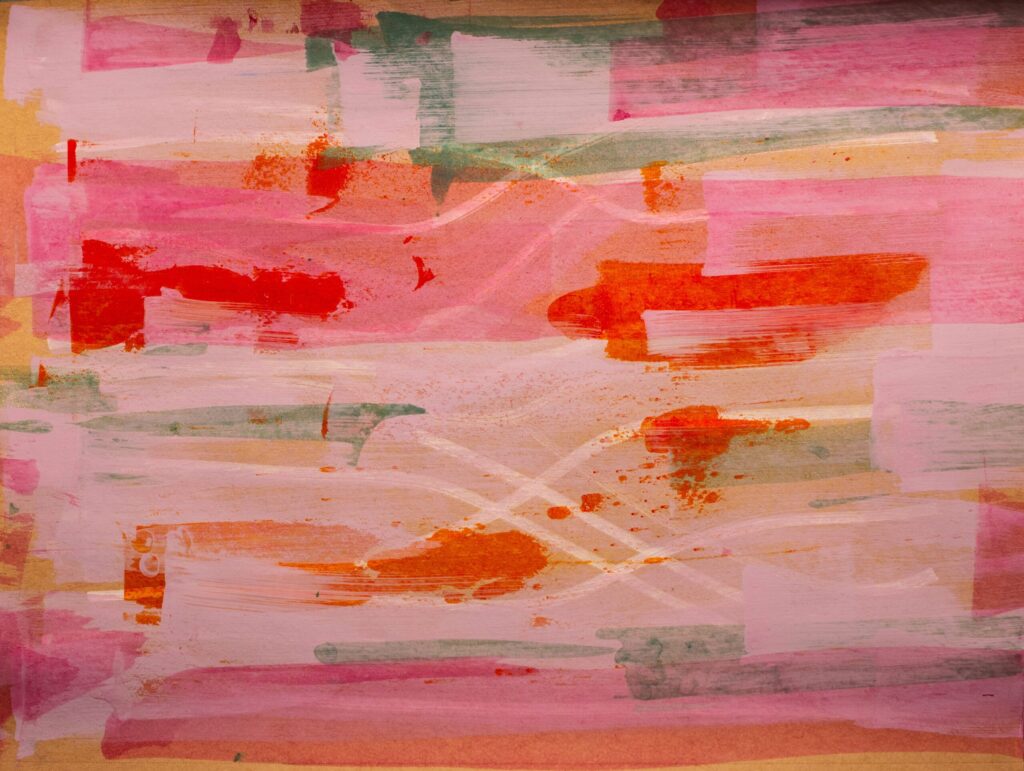
Over time, I injected a bit more feeling into the art in the form of color. I played with a palette that reflected my personal mood and experimented with watery techniques that created the aesthetics of clouds or storms. These color washes were my sound bed. I would place the lines on top of these base layers. The range of color would inform the contour of the wrinkles and amplify the contrast. The results took on greater meaning on a second look.
LINES, MOOD & FEAR (2022)
It felt daunting that anything I would do would be desired. So it was scary to think about releasing this because I had sort of a snobbery from art school and just a general disinterest in marketing myself.In doing these, I found that at times I would apply a lot of white, chalky paint to cover up some of the qualities that I didn’t like. Inevitably, the covering up ended up becoming the lines, and the balance of hiding and revealing parts of me made for a rich narrative in the painting. The mysterious dance between the lines ended up becoming even more about relationships, as it felt more intimate, tense, and playful.
THE DANCE (2023)
I feel that every day is a dance of negotiating space, whether it is a lifetime or a singular moment. A dance is about a spatial relationship. We can be distant or intimate. We can be in or out of sync. We might be further away. We might be getting closer. We might even become one.
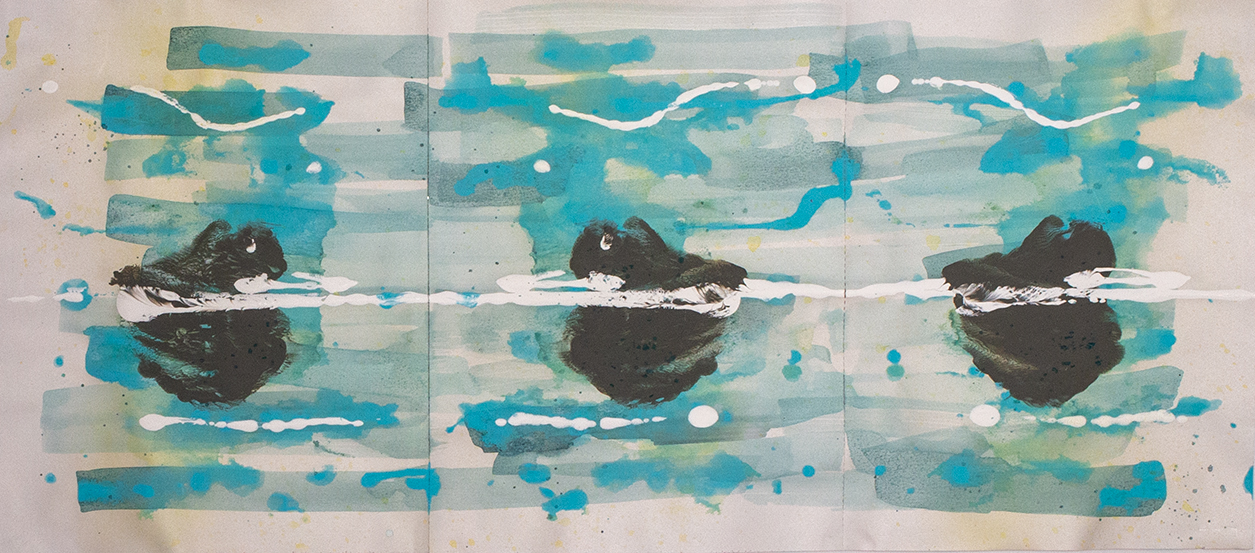
Chapter 6 | 2023
“Three Sides of the Truth ”
“I found myself using paint as a method to depict conversation and discussion. By placing different lines and wet paint shapes on one side or the other of a page divided into three parts, and folding each side into an empty center space, the effect not only amplified the paint on each side but also created equal yet distinct points of view in each of the three panels. Some colors and forms were identical, some were overpowered, and some remained untouched. I call these works “Three Sides of the Truth”: there is your side, their side, and in the middle is the truth. The works abstractly depict the nuances of debate.”
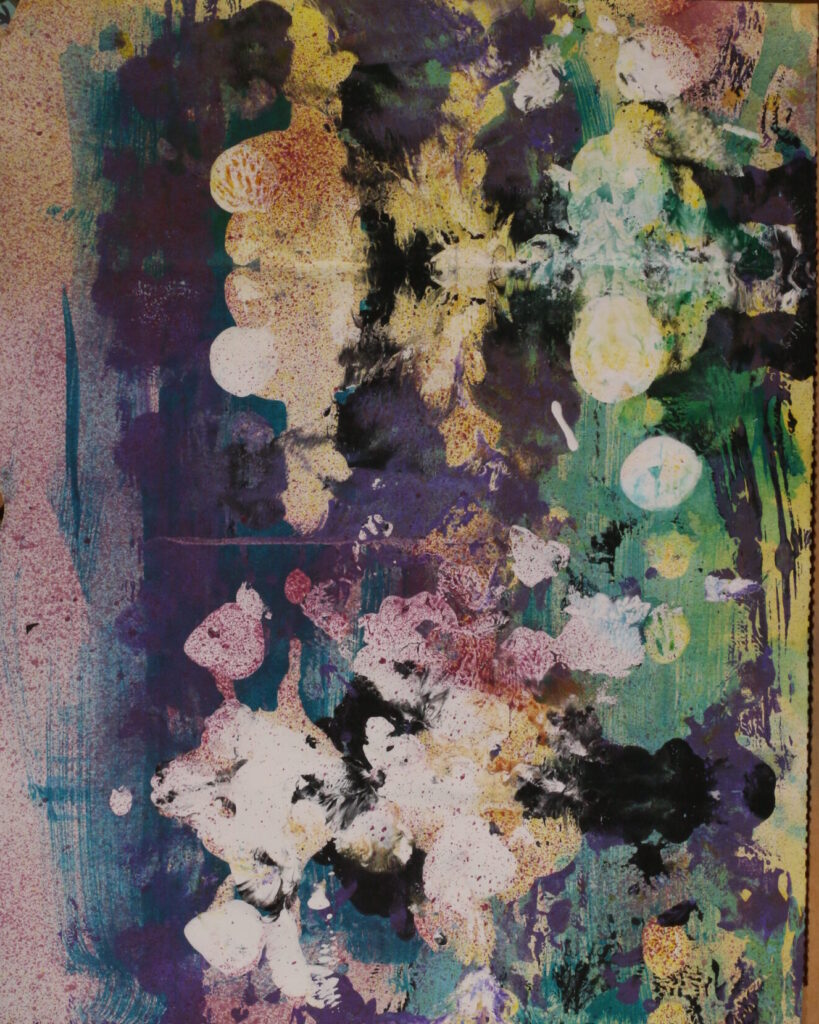
Chapter 7 | 2023
”In Lieu Of “
“In the wake of the loss of two significant friends, I found myself unsure how to mourn. This colorful painting series emerged through reflective techniques as a personal response to grief. It became my way of giving flowers.”
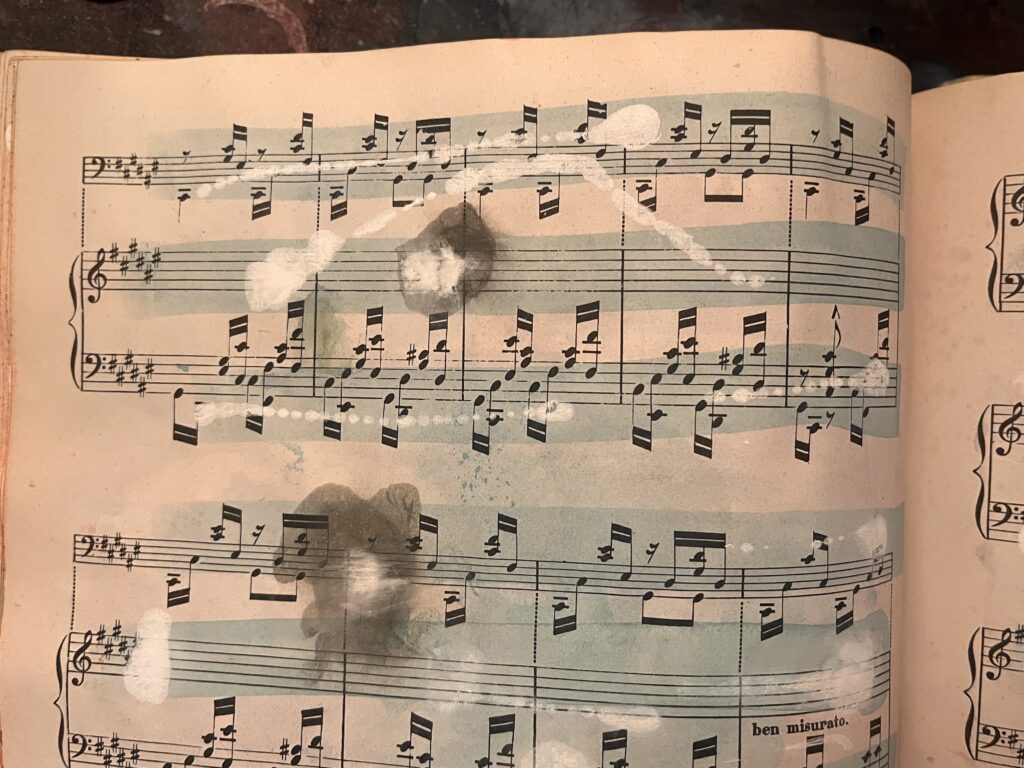
Chapter 8 | 2024
Beat Tapes / Wordless Books
“I create books of color and lines, where each page informs the next. Pages may be blank or contain images and information, which I then paint over, responding to preceding or subsequent pages. Sometimes I close the book to reflect on corresponding pages, creating unpredictable organic shapes. These books function like beat tapes, inspired by music producers I admire—DJ Shadow, Prince Paul, MF Doom, and others—who experiment with their medium, creating collections of experimental tracks. Painting over existing material is akin to playing my instrument over an old music track or scratching to a breakbeat. For a music geek like myself, beat tapes are most compelling in their raw, unpolished form. The books and beat tapes both take you on a journey without words; in my case, it is a visual narrative that can be appreciated by a child, at any age or language.”
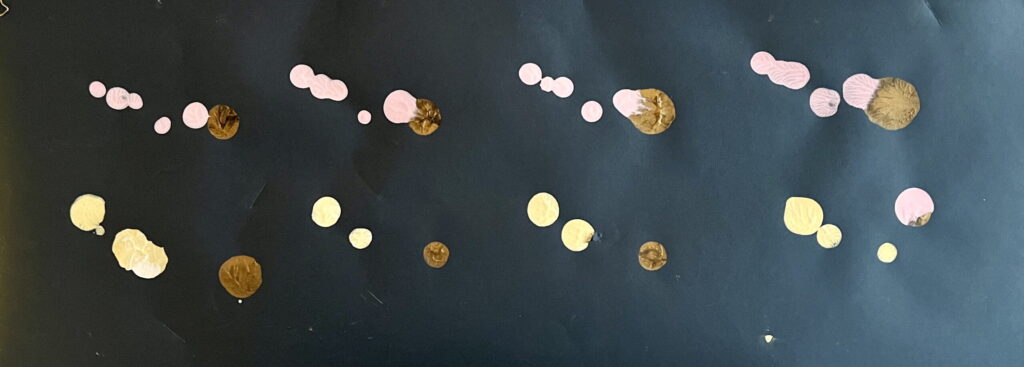
Chapter 9 | 2025
Tempo
“Inspired by the rhythms of music and the patterns of everyday life, I created a new series of paintings on long canvases and paper rolls, exploring how movement and repetition shape visual narrative. Marks of color and line represent sound or memories, like echoes or reverb, fading with each repetition. These marks evolve over time, shifting and clashing slightly off the beat with each pass. New marks and moments emerge to continue the unfolding narrative.”
BACKSTORY | BIOGRAPHY
The Language of Line, Music, and Narratives
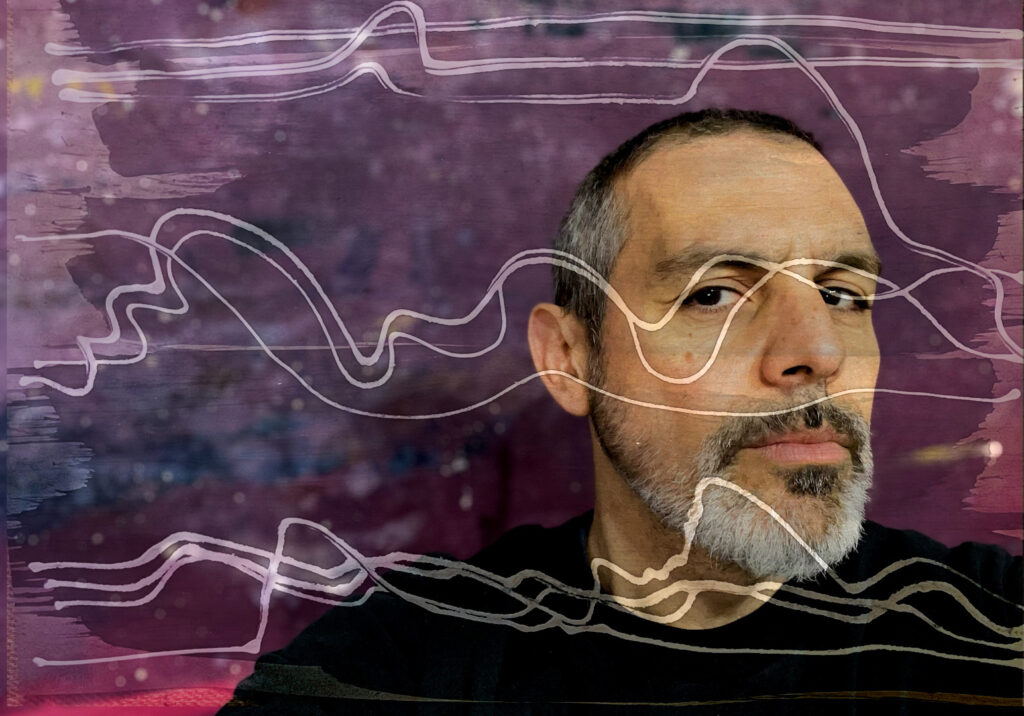
“My foundation in art began in childhood, where I developed a visual literacy through observation and engagement with line, color, and form. I earned a degree in Architecture from Pratt Institute in 1992, where I learned a language of lines, dashes, dots, and curves that allowed me to communicate design clearly and quickly. While at Pratt, I presented on the future of art and the emergence of hip-hop DJing and music production, and I brought DJs into the classroom to demonstrate this then little-known art form to a group of creatives.
My love for DJ culture led me to the film “Battle Sounds,” which premiered at the New Museum of Contemporary Art and was later featured in The 1997 Whitney Museum Biennial. Years deeply engaged in this culture led to the development of TTM, a visual musical notation system for DJ scratching that uses line patterns similar to architectural language. In 2001, TIME named TTM one of the 100 innovations in music, and it later became the software Sxratch.
Years of working in documentary film, capturing and shaping images into narrative sequences, conducting interviews, and first-hand witnessing the emotional journeys of my subjects have informed my approach. This experience led to an interdisciplinary practice engaged in research, image creation, music-making, film editing, and narrative pattern reflection as a means of understanding and offering greater insight.” – John Carluccio